
I used to think heart health was something you measured once a year. Blood pressure. Cholesterol. A few numbers on a page, followed by either relief or worry.
What I didn’t realize back then was how much of heart health shows up quietly, long before any test does.
It shows up in how easily I get out of breath walking uphill.
In how tense my shoulders feel by evening.
In how often I rush through meals without noticing I’m doing it.
Somewhere after 45, the heart stops being an abstract organ and starts feeling more like a companion you need to pay attention to.
Why this topic comes up more after 45
In earlier years, the heart mostly stays silent unless something goes wrong. Later on, it starts sending softer signals.
A little fatigue that wasn’t there before.
Sleep that feels lighter.
Moments of pressure, not pain, just awareness.
For many of us, this isn’t illness. It’s information.
The body asking for a slightly different rhythm than it used to need.
What people usually notice first
Most people don’t notice their heart during workouts. They notice it in everyday life.
Climbing stairs and pausing at the top.
Carrying groceries and needing a moment to settle.
Feeling wired but tired at the same time.
It’s not weakness. It’s feedback.
And often, the feedback isn’t asking for drastic changes, just more consistency and less strain.
Small adjustments people naturally explore
Without even planning to, many of us start making quiet changes.
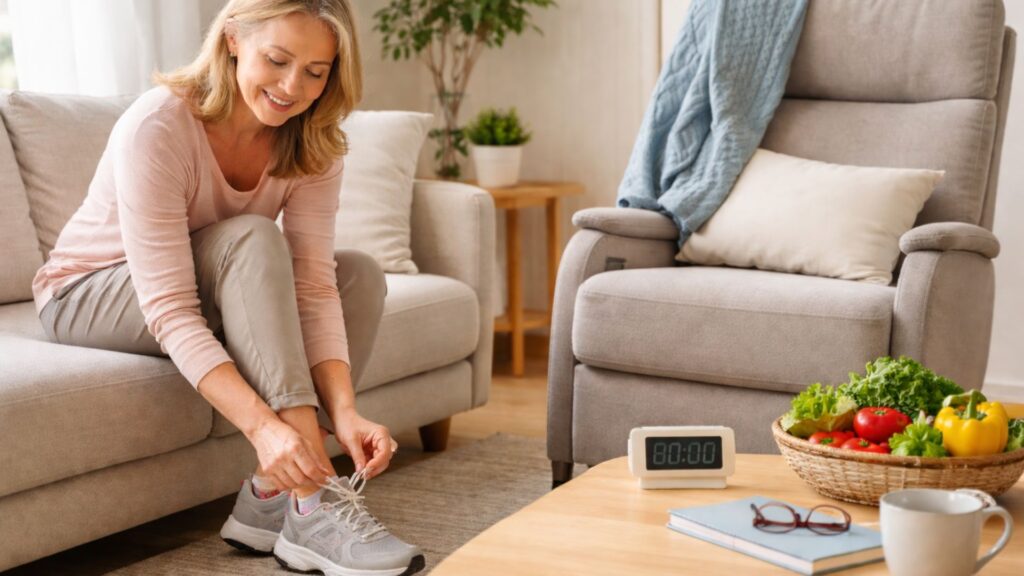
Walking a little more and rushing a little less.
Sitting down to eat instead of eating on the go.
Choosing routines that calm the nervous system instead of keeping it constantly alert.
These aren’t dramatic lifestyle overhauls. They’re gentle corrections that make daily life feel steadier.
Practical daily habits that support a healthy heart
I’ve learned that heart support isn’t about perfection. It’s about patterns.
Moving regularly, even if it’s just walking.
Pausing between tasks instead of stacking stress all day.
Sleeping well enough that mornings don’t feel like recovery sessions.
The heart responds well to predictability.
Not excitement. Not extremes. Just steadiness.
A gentle closing thought
A healthy heart isn’t just something you protect for the future. It’s something you feel in the present.
In how calm your evenings are.
In how balanced your energy feels.
In how connected you feel to your own pace.
Heart health, at this stage of life, is less about pushing and more about listening, and responding with kindness.
If you’re exploring related topics, you may also find value in reading about better sleep, calmness and stress relief, or mobility and strength, since they all quietly support the heart in their own way.
🔗 Supportive Tools Mentioned in This Article
These are everyday comfort items, not medical products.
Home Blood Pressure Monitor
Useful for awareness between doctor visits, without obsessing over numbers
Lightweight Walking Shoes
Encourage gentle, consistent movement during daily routines without putting strain on joints.
Kitchen Tools for Lighter Cooking
Make everyday meals easier to manage